
From getting dressed, eating breakfast and brushing our teeth to walking on the street, waving down a bus and running for a train, gross motor and fine motor skills are crucial to our ability to lead independent lives and engage with the world around us. Most people take their motor skills for granted, but individuals with Autism, Down syndrome, Cerebral Palsy and other additional needs can have their gross and fine motor development delayed by their neurological challenges.
In this blog, we will examine the differences between gross motor and fine motor skills, track the typical milestones of motor development and offer advice on how to support the development of these skills in children and adults with additional needs.
What Are Gross Motor Skills?
Gross motor skills refer to body movements involving the large muscle groups in our arms, legs and torsos, which enable us to perform tasks such as walking, running, jumping and throwing. The earliest indicator of gross motor development is when a baby is able to hold up their head, followed by rolling onto their front and back, sitting, crawling and eventually walking.
As we get older, we can continue to develop our gross motor skills by exercising and strengthening those muscle groups. This way, over time, we can improve our balance, agility and control while manipulating larger objects. These skills not only contribute to better bodily health, but can impact our social and emotional wellbeing.
What Are Fine Motor Skills?
Fine motor skills are the small movements that utilise the muscles in our hands, wrists and face. They make it possible to perform coordinated tasks such as speaking, eating, writing, dressing and tying shoe laces, to name but a few. Gripping objects between a finger and thumb, known as a pincer grip, is the first sign of fine motor development in young children, alongside putting objects in their mouth.
Our fine motor skills continue developing throughout childhood and into adolescence as we learn to use essential tools such as cutlery, scissors and writing implements, as well as get dressed and put on shoes. For this reason, our ability to complete fine motor activities can directly indicate our independence.
Milestones in Gross and Fine Motor Development
Much like speech and language acquisition, there are several milestones that children are expected to meet during the early years of their gross and fine motor development. That being said, it is important to recognise that every child develops at their own pace and not all children will reach each of these milestones at the same time. For example, it is not uncommon for some children to exhibit fine motor development before advancing in their gross motor skills, or vice versa. While it is normal to see these differences between children, being able to identify when your child requires additional support with their motor development is crucial to ensure they are adequately equipped for adolescence and adulthood.
Children typically perform these gross and fine motor activities at the following milestones:
Newborn to 3 Months
- Attempting to swing their arms or ‘bat’ away objects.
- Noticing their hands and grasping at objects.
3 to 6 Months
- Holding small objects in both hands.
- Reaching for toys with both arms.
6 to 12 Months
- Shaking toys with an auditory effect, such as rattles.
- Picking up small objects with their index finger and thumb, known as a pincer grip.
- Sitting without any support.
- Beginning to crawl.
1 Year Old
- Beginning walking with help.
- Building towers with block toys.
- Pushing and pulling toys with wheels.
- Clapping hands together.
2 Years Old
- Jumping with both feet at the same time.
- Turning single pages of a book.
- Beginning simple threading with strings and large beads.
- Beginning to dress themselves with help.
3 Years Old
- Running without falling.
- Cutting paper with safety scissors.
- Drawing circles on paper.
4 Years Old
- Catching balls with their arms and hands.
- Walking upstairs using alternating feet.
- Getting dressed and undressed with no help.
5 Years Old
- Holding a pencil correctly and comfortably.
- Balancing on one foot.
- Catching balls with both hands.
6 Years Old
- Throwing a ball with accuracy.
- Eating with a knife and fork.
- Putting together simple puzzles.
Activities for Gross and Fine Motor Development
While most children naturally develop their motor skills throughout their formative years, there are a number of gross and fine motor activities designed to support the development of children and adults with neurological challenges. Facilitating gross and fine motor development through fun and engaging activities allows the individual you are supporting to feel excited about learning new skills while steadily growing their independence.
Some of the activities you can practice with your child include:
Gross Motor Activities for Young Children
- Spending time on their stomach to develop gross motor muscles used for sitting and crawling.
- Sitting aided, and eventually unaided, with toys between their legs.
- Placing toys just out of their reach to encourage forward movement, such as sliding on their stomach, rocking forward or crawling.
- Climbing stairs or frames, such as playground or soft play equipment.
- Kicking or catching a balloon.
Fine Motor Activities for Young Children
- Offering them small pieces of food to develop their pincer grip.
- Encouraging them to bang, drum or rattle musical instrument toys.
- Stacking toys or objects.
- Sorting or posting different shaped toys.
- Threading beads onto a thread.
- Moving objects from one hand to the other.
- Turning the pages of a book.
Gross Motor Activities for Older Children and Adults
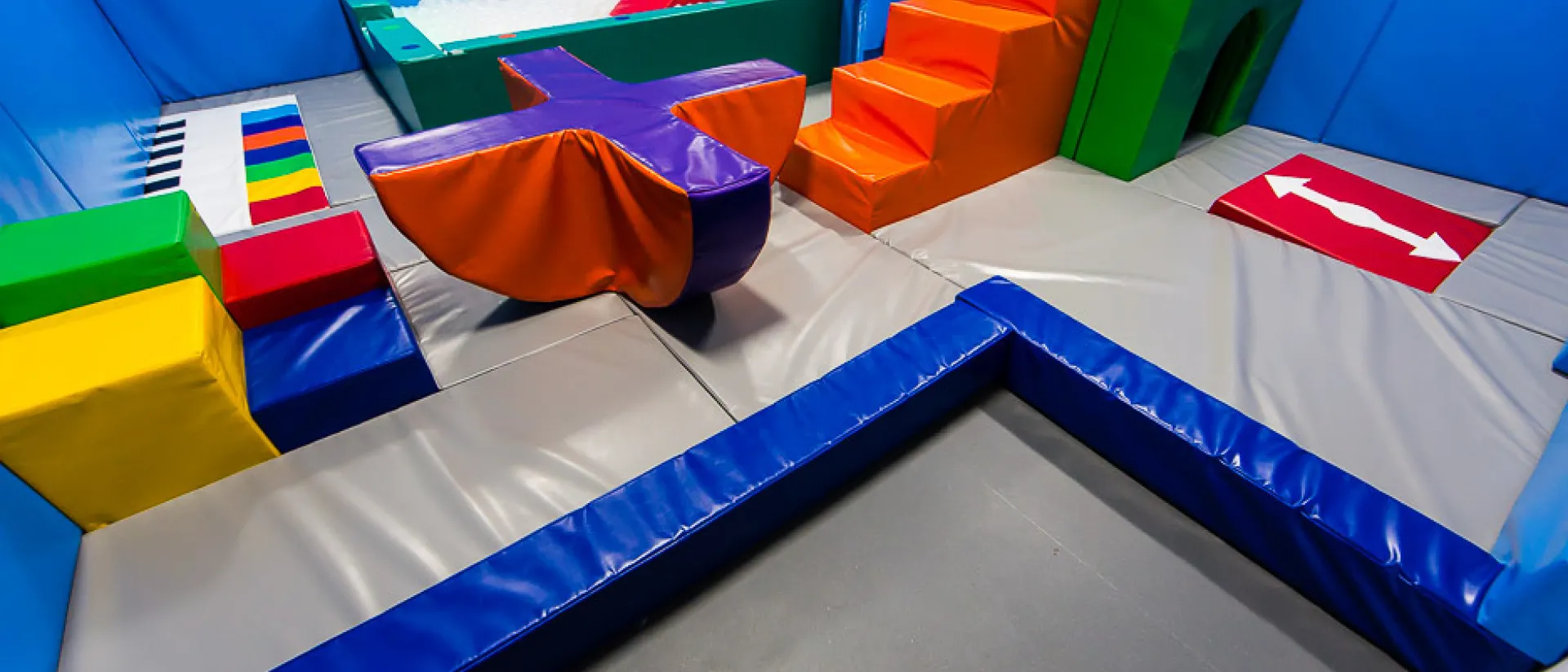
- Creating an obstacle course using soft steps, soft stepping stones and other products that require them to use of their whole body.
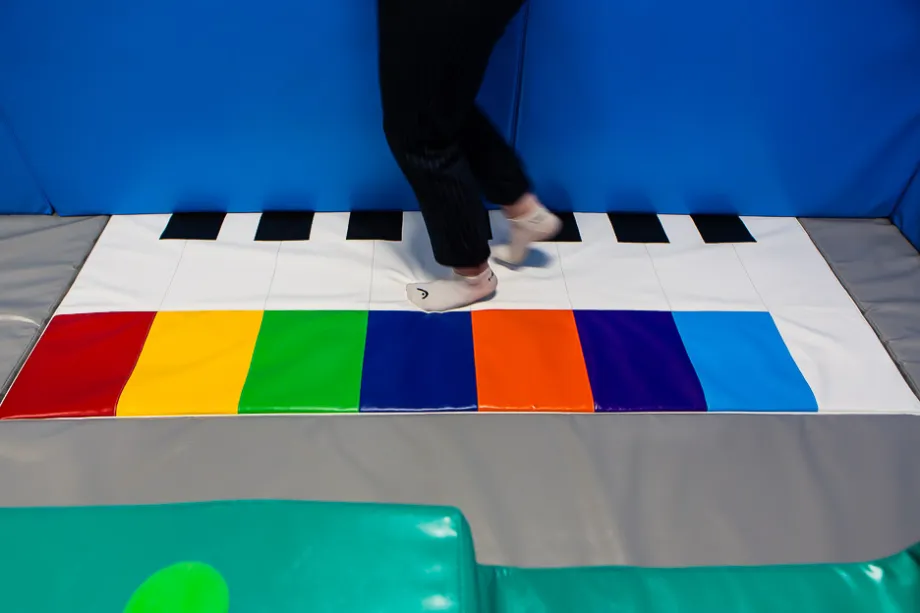
- Dancing to their favourite music, either freestyle or to a routine.
- Walking along balance beams.
- Swimming.
- Riding a bike.
- Playing target games such as basketball or netball. These activities similarly benefit hand-eye coordination.
Fine Motor Activities for Older Children and Adults
- Making and preparing their own food. This could include spreading, pouring, mixing or rolling.
- Playing with construction toys, such as building blocks, modelling kits and moulding kits.
- Playing balancing games, such as Jenga or pick-up sticks.
- Weaving, threading and sewing.
- Creating origami or paper planes.
- Cutting paper with scissors.
- Playing card games.
- Solving jigsaw puzzles.
How to Support Gross and Fine Motor Development
When you are introducing children or adults to gross and fine motor activities for the first time, it is important to consider a number of factors in order to make the learning process as positive and enjoyable as possible.
Positive Reinforcement
Whether an activity has gone well or not, encouraging your child with positive reinforcement is instrumental to developing their resilience. Praising their efforts instead of results will give them more enthusiasm to try the activity again, gradually developing their gross or fine motor skills over time.
Create a Mix of Activities
Introducing a mix of activities that challenge and match their abilities will provide more opportunities for success and help to increase their self-confidence.
Repetition
It is unlikely that your child will excel or even succeed at an activity the first time they try it, so remaining consistent is essential to ensure they continue to develop their skills.
Clear Instructions
Keep your instructions for the activity as simple and digestible as possible so as not to overwhelm your child. We recommend delivering one clear instruction at a time when performing a new activity.
Go at Their Pace
Let their verbal or non-verbal reactions to the new activity dictate the pace at which to perform the activity. Going too fast or introducing a new activity before they have had some success with previous gross or fine motor activities may lead to frustration. Make time for success, no matter how small it may be.
Create a Supportive Learning Environment
Each individual has their own set of sensory needs, and different environments can be more conducive to them being receptive to new skills. Some may thrive when working in small groups, while others may prefer to learn a new activity independently before joining a group.
Products for Gross and Fine Motor Development from Experia
We hope this article has aided your understanding of gross and fine motor skills and that you feel more confident about when to seek the advice of a trained professional, such as a paediatrician or sensory specialist. At Experia, we design and produce numerous sensory products to support the development of gross and fine motor skills in children and adults, and offer free room design services for all of our customers.
For more information about our products and services, or to discuss which gross or fine motor activities would best suit your child, please contact us for an obligation-free chat about your specific requirements.