
Why Refreshing Your Space Is Essential for Engagement, Inclusion, and Impact
If you’re reading this, you already understand something crucial: the built environment can either enable participation or become a barrier to it. By investing in a sensory room, you’ve taken a proactive step towards inclusion, whether that’s in a school, university, healthcare setting, or sports venue.
But inclusion is not a one-off project. It’s an ongoing commitment.
Sensory rooms installed three, five, or even ten years ago were designed around the best knowledge and technology available at the time. Since then, both have moved on significantly. Our understanding of neurodiversity has deepened, user expectations have evolved, and new equipment now offers greater impact with less maintenance.
As we look ahead to 2026, refreshing your sensory space is no longer just a “nice to have”—it’s essential for ensuring your investment continues to deliver real value.
1. Sensory technology has evolved
Many early sensory rooms relied on equipment that, while effective, can be high-maintenance and limited in flexibility. Today’s solutions are designed to be more robust, more immersive, and more responsive to the user.
Key upgrade trends we’re seeing for 2026 include::
Low maintenance visual features
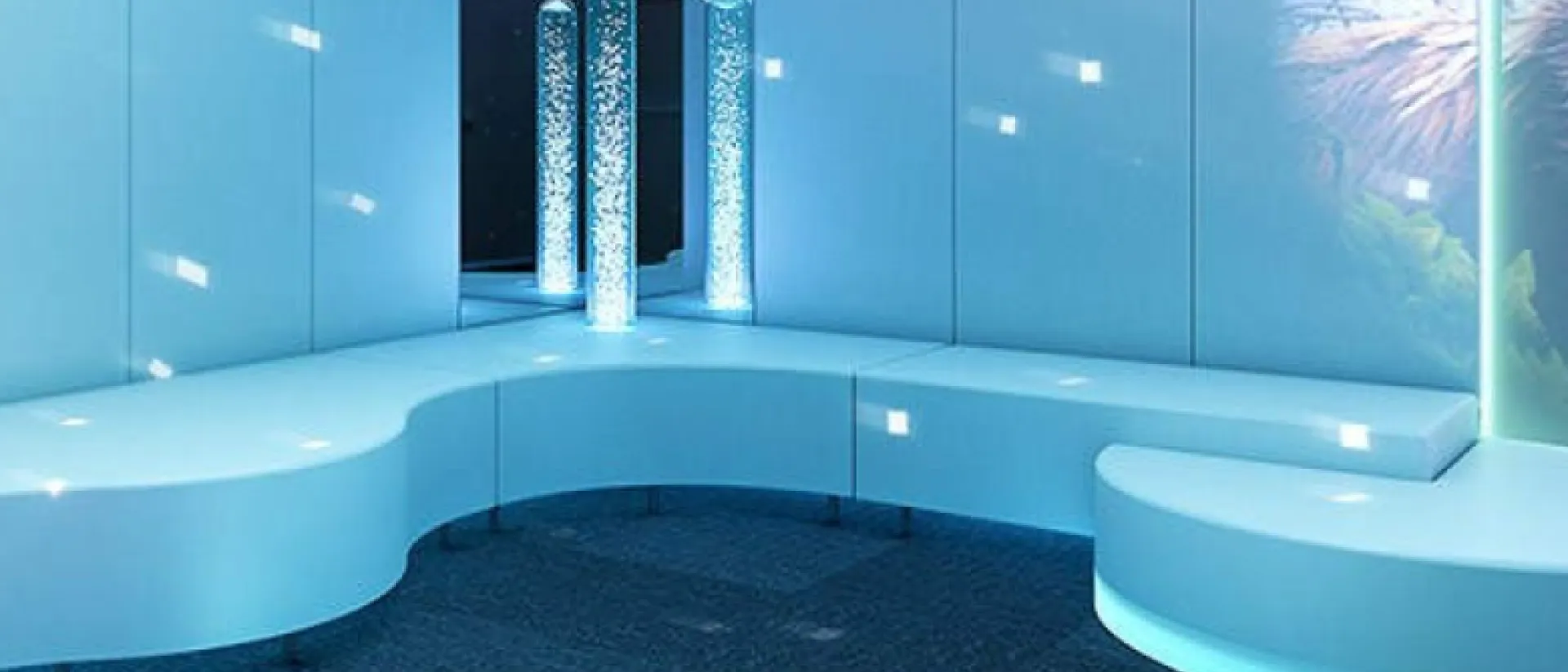
Traditional water-filled bubble tubes require regular cleaning, monitoring, and ongoing maintenance. Today’s sensory environments are increasingly moving towards robust, low-maintenance visual equipment such as high-resolution LED screens. These technologies deliver rich, dynamic visual stimulation—from slow, calming colour transitions to engaging cause-and-effect content—without the hygiene risks or downtime associated with water-based systems, making them ideal for busy, multi-use settings.
Immersive sensory experiences
Increasingly, sensory rooms are designed to surround the user. Features such as LED Infinity Tunnels or Mirrored Infinity Dens create depth, movement, and cause-and-effect interaction, responding to different triggers. These installations engage users across age ranges, from early years to adults.
Greater user control
Research consistently shows that therapeutic benefit increases when users can control their environment. Adjustable lighting, sound, and visuals support independence, confidence, and emotional regulation—particularly important for neurodivergent users.
2. From “sensory room” to “rainbow room” in education
In schools and colleges, language and purpose are shifting. Clinical or deficit-focused terms are being replaced with inclusive concepts such as 'rainbow rooms or 'nurture rooms'.
These spaces are no longer viewed as places of withdrawal, but as supportive environments that help learners regulate, reset, and re-engage.
Refreshing an educational sensory space often means rethinking its design rather than simply replacing equipment:
- Zoning for different needs
Creating distinct areas for calming, self-regulation and for alerting or sensory integration allows the room to support a wider range of learners. - Low-arousal design choices
Soft colour palettes, muted greens and blues, and carefully controlled lighting reduce overstimulation and create a sense of safety. - Flexibility and inclusivity
A well-designed room should support a pupil who needs movement and sensory input just as effectively as a pupil who needs a quiet, enclosed cocoon.
3. Universities: Supporting wellbeing and retention
For universities, sensory spaces are increasingly recognised as essential infrastructure for student wellbeing. Transitioning to higher education can be overwhelming, particularly for neurodivergent students, and sensory overload is a common challenge.
Many institutions are now refreshing or expanding sensory provision in libraries, wellbeing centres, and quiet study areas. This may involve:
- Replacing generic furniture with adaptive seating that supports proprioceptive needs or allows safe movement and stimming
- Introducing adjustable lighting and acoustics
- Installing sensory pods or enclosed spaces that offer respite from busy campus environments
A refreshed sensory space can play a meaningful role in reducing anxiety, supporting mental health, and improving student retention.
4. Sports stadiums: Inclusion that enhances the fan experience
In live sports environments, sensory rooms have opened doors for families and individuals who may otherwise avoid matches due to noise, crowds, or unpredictability.
However, these spaces need to evolve alongside fan expectations.
Leading venues are now enhancing their sensory provision to improve both social and economic outcomes:
- Personalised sound control, such as Bluetooth systems that allow visitors to play calming music
- Visual connection to the game, using acoustic glass that dampens crowd noise while maintaining a clear view of the action
- Comfortable, adaptable layouts that cater to different sensory thresholds
Refreshing a stadium sensory room reinforces your commitment to accessibility and creates a more inclusive, welcoming fan experience.
5. Funding Opportunities for UK Organisations
For UK schools, local authorities, and education providers, the upcoming years present a significant opportunity. The government’s £3 billion capital investment programme (2026–2030) aimed at creating specialist SEND places can be used for:
- Building works and renovations
- Fixed sensory equipment
- Lighting, wall padding, and integrated installations
While staffing costs are excluded, this funding is ideally suited to sensory room upgrades. Organisations planning ahead and aligning proposals with local sufficiency strategies will be best placed to benefit.
Planning for Lasting Impact
A well-designed sensory room supports emotional regulation, reduces anxiety and restlessness, and helps users feel safe and understood. But equipment ages, expectations change, and “good enough” quickly becomes outdated.
Refreshing your sensory space—whether through targeted equipment upgrades or a full redesign sends a clear message: your users’ wellbeing still matters.
At Experia, we work with organisations to review existing sensory rooms, understand changing user needs, and design spaces that continue to deliver meaningful impact. If your sensory room hasn’t been reviewed in the last few years, now is the time to start the conversation.
Our team are always here to talk about how we can help with your sensory and immersive needs, whatever your budget, whatever your space. Call or email our team today.