
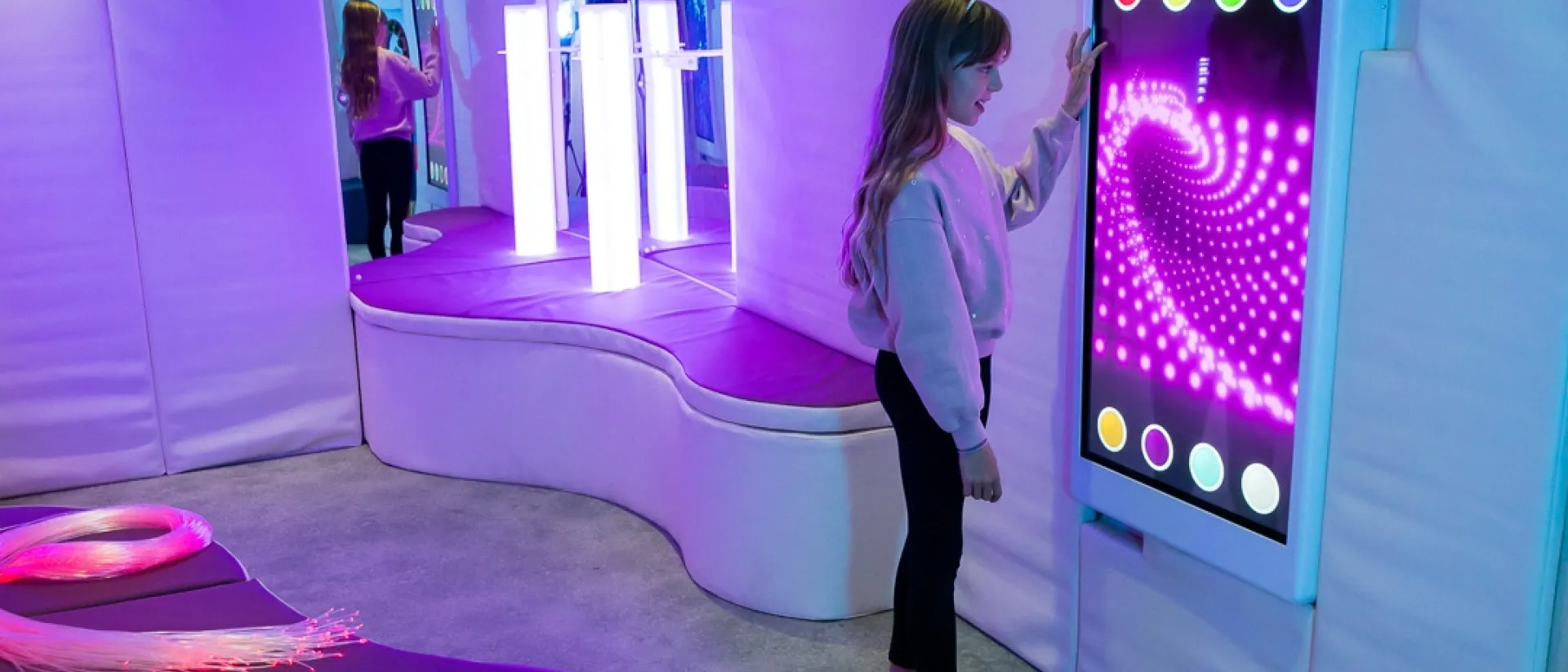
Sensory environments are evolving rapidly as new technologies allow lighting, sound and interactive systems to respond dynamically to users. Advances in immersive projection, responsive environments and intelligent control systems are transforming how multisensory spaces are designed and used.
The future of sensory environments is moving beyond traditional sensory rooms toward adaptable environments that can support learning, therapy, wellbeing and accessibility across many different settings.
How Sensory Environments are Evolving
Early sensory rooms focused primarily on simple lighting effects, tactile equipment and calming environments. These environments remain valuable, but new technologies are expanding what sensory spaces can do.
Modern sensory environments increasingly combine:
- immersive visual systems
- interactive projection environments
- programmable lighting systems
- responsive sound environments
- intelligent control systems
These technologies allow environments to change dynamically depending on the needs of the user or the activity taking place.
Immersive Sensory Environments
Immersive sensory environments surround the user with visual and sensory experiences that fill the room.
Projection technology allows walls and floors to become part of the sensory environment. Instead of interacting with individual pieces of equipment, users experience environments that respond to movement and activity.
Immersive environments are increasingly used in education and therapy settings where engagement and exploration are important.
These environments can support learning experiences, relaxation or sensory exploration depending on how they are configured.
Interactive Projection Systems
Interactive projection technology allows sensory environments to respond to movement or touch.
Floor projection systems, for example, can display images or animations that change as users move through the space. This encourages exploration, movement and engagement.
Interactive projection environments are particularly useful in settings where encouraging activity and participation is important, such as:
- schools
- therapy environments
- rehabilitation programmes
- community environments
By combining visual stimulation with movement, interactive environments create experiences that feel engaging rather than passive.
Adaptive Sensory Environments
Another emerging development is the creation of adaptive sensory environments that respond automatically to user behaviour.
Sensors and control systems can detect movement, sound or changes in the environment and adjust lighting, sound or visual elements accordingly.
These environments may adapt to:
- changes in lighting levels
- user movement within the room
- the type of activity taking place
Adaptive environments allow sensory spaces to become more responsive and personalised.
Intelligent Control Systems
Many modern sensory environments use central control systems that allow lighting, sound and interactive elements to be managed easily.
These systems allow educators, therapists or carers to select different sensory environments depending on the activity taking place.
For example, a room might be configured for:
- calming sensory environments
- interactive learning activities
- therapeutic sensory stimulation
Control systems allow environments to change quickly, enabling a single room to support many different activities.
Explore Our Guides
Smaller Sensory Environments and Flexible Spaces
Another important development is the creation of smaller sensory environments that can be integrated into existing buildings.
Instead of dedicating entire rooms, some environments provide compact sensory spaces that allow individuals to step away from busy surroundings.
These environments are increasingly used in:
- transport hubs
- workplaces
- public venues
- educational facilities
Providing flexible sensory spaces allows organisations to support sensory regulation even when space is limited.
The Role of Sensory Environments in Inclusive Design
As awareness of neurodiversity increases, sensory environments are becoming an important part of inclusive design.
Many organisations now recognise that environments should support people with a wide range of sensory needs.
Sensory environments help make buildings more accessible by providing spaces where individuals can regulate sensory input.
This approach is increasingly reflected in the design of public buildings, educational facilities and healthcare environments.
The Future of Multisensory Learning
In education, immersive sensory environments are beginning to support new forms of learning.
Interactive projection systems and immersive environments can create learning experiences where students explore visual environments, interact with digital content and engage with subjects in new ways.
These environments can help make learning experiences more engaging, particularly for students who benefit from visual or interactive learning approaches.
Ongoing Innovation in Sensory Environments
Technology continues to shape the future of sensory environments.
Developments in lighting systems, projection technology and environmental control systems are creating new opportunities to design spaces that support wellbeing, therapy and learning.
While traditional sensory rooms remain valuable, many organisations are now exploring how emerging technologies can create environments that are more adaptable and engaging.
Frequently Asked Questions
The future of sensory environments involves immersive projection systems, interactive technologies and intelligent control systems that allow sensory spaces to respond dynamically to users.
Yes. Many modern environments include interactive projection and responsive lighting systems that respond to movement or activity.
An immersive sensory environment surrounds the user with visual and sensory experiences through projection systems and integrated lighting.
Traditional sensory rooms will continue to be used, but many environments are evolving to include immersive and interactive technologies.
Immersive sensory environments are increasingly used in schools, healthcare settings, therapy environments and public spaces.
Have a Question or Need Some Avice?
Send us a message and one of our team will get back to you within one working day. Prefer to speak to someone? Call on: 0800 612 6077 email to: [email protected]