
Project overview
Project type: Sensory environment
Location: Reading, United Kingdom
Client: Reading Leisure Centre
Sector: Public leisure & community facilities
Primary users: Families, children with sensory processing differences, and community visitors
Introduction
Public leisure centres are designed to be energetic, busy environments. Swimming pools, gyms and family activities create spaces filled with noise, movement and visual stimulation.
For many visitors this is part of the enjoyment. For others, particularly individuals with sensory sensitivities or neurodivergent conditions, these environments can feel overwhelming.
Reading Leisure Centre recognised the importance of creating a more inclusive facility for all visitors and introduced a dedicated sensory environment. The new space provides a calm and supportive area where individuals can regulate sensory input and take a break from the busy leisure environment.
The challenge
Leisure centres are among the most stimulating public environments. Bright lighting, loud sounds, crowds and constant activity can create sensory overload for some visitors.
Families with children who experience sensory sensitivities may find it difficult to enjoy leisure facilities without access to quieter environments.
Reading Leisure Centre wanted to create a dedicated sensory space that would allow visitors to step away from the main activity areas and experience a calm, controlled environment.
The goal was to improve accessibility and create a more inclusive leisure facility for the local community.
Experia design approach
Experia worked with the leisure centre team to design a sensory environment suitable for a busy public facility.
The design focused on creating a calm space that contrasts with the stimulating environment of the leisure centre.
Key considerations included:
• providing a quiet and calming space within a busy public venue
• creating gentle visual stimulation without overwhelming users
• ensuring the environment could be easily supervised by staff
• designing a flexible space suitable for individuals and families
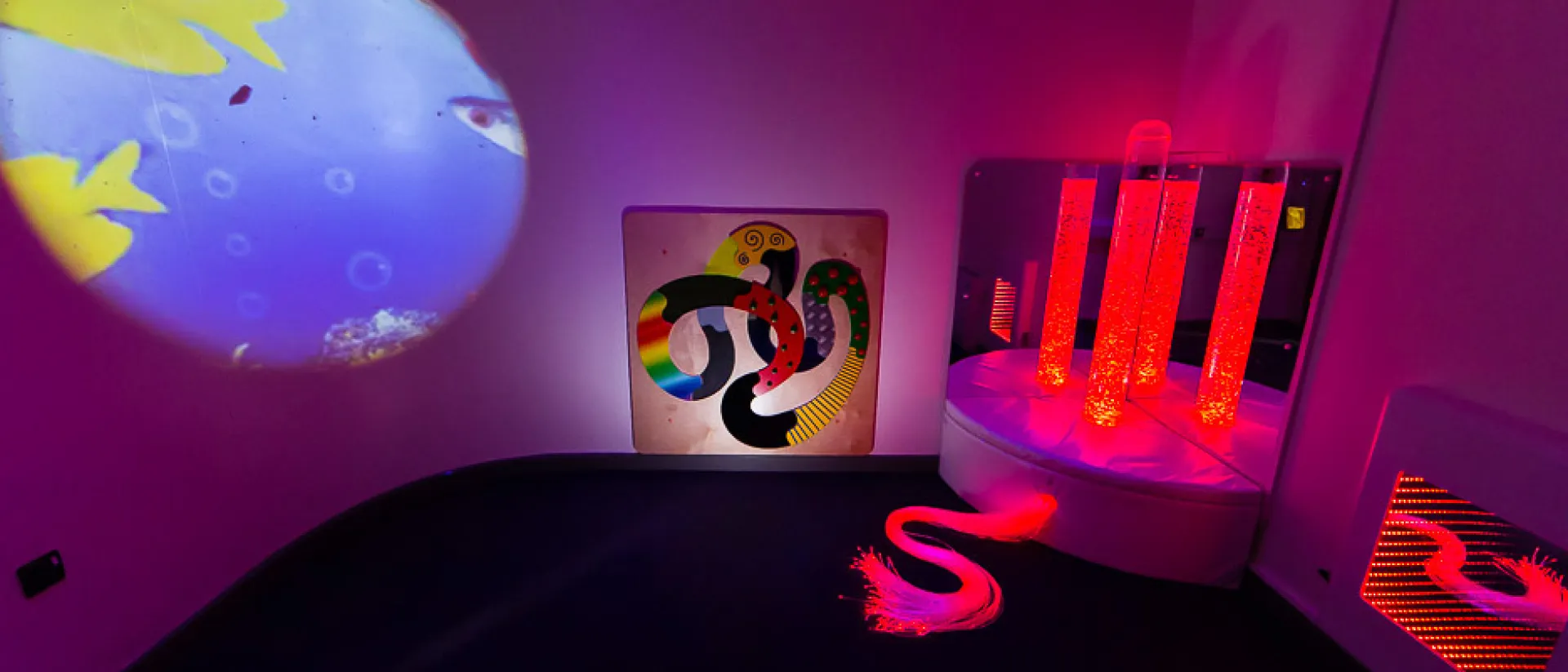
The resulting environment offers a controlled sensory experience that helps visitors relax and regulate sensory input.
Key sensory features
The sensory environment includes a range of carefully selected sensory elements designed to promote relaxation and engagement.
Features include:
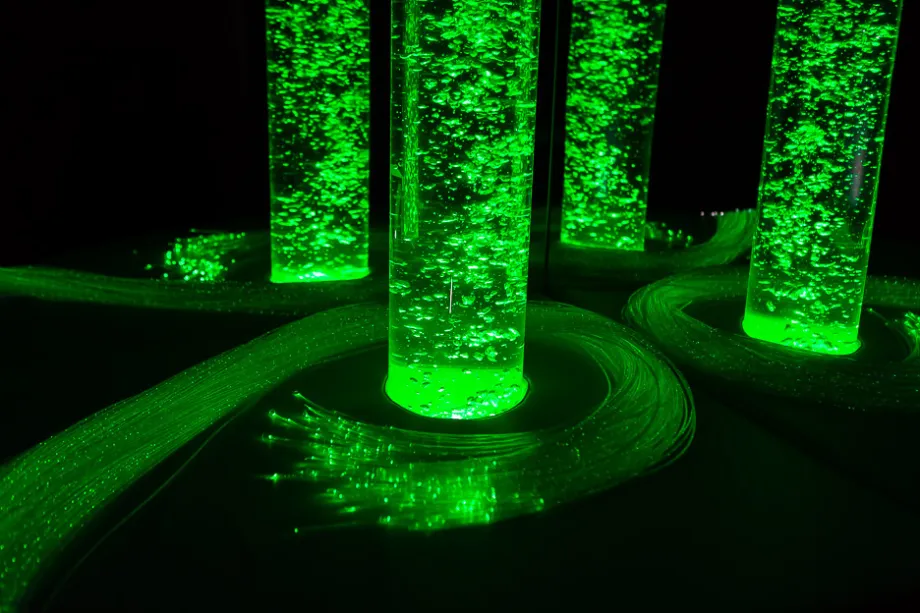
• bubble tube lighting creating gentle visual movement
• fibre optic lighting providing calming colour changes
• interactive sensory equipment encouraging exploration
• soft seating areas providing comfortable relaxation spaces
These elements work together to create a calming sensory experience that contrasts with the busy atmosphere of the leisure centre.
Before and after transformation
Before the project, the leisure centre did not have a dedicated space where visitors experiencing sensory overload could take time away from the busy environment.
The new sensory environment provides a calm and supportive space where individuals can relax before returning to the main activities within the leisure centre.
The transformation demonstrates how sensory environments can improve accessibility within public leisure facilities.
Designing sensory spaces in public leisure facilities
Creating sensory environments within public spaces requires careful design.
Unlike school environments where usage can be structured, leisure centres are unpredictable and often busy. Sensory spaces in these environments must balance accessibility, safety and ease of supervision.
Important considerations include:
• providing a clear contrast between the busy environment and the sensory space
• ensuring the environment remains calm and welcoming
• designing a flexible space that can support individuals and families
• maintaining visibility and accessibility for staff
When designed correctly, sensory environments can significantly improve accessibility in community facilities.
How the space is used
The sensory environment is used by visitors who benefit from a calm space within the leisure centre.
Typical uses include:
• providing a break from the busy leisure environment
• helping individuals regulate sensory input
• allowing families to enjoy leisure activities with greater confidence
• creating a calm space before or after activities
The room has become an important accessibility feature within the leisure centre.
The outcome
The sensory environment has helped Reading Leisure Centre create a more inclusive facility for the local community.
Visitors who experience sensory sensitivities now have access to a calm space where they can regulate sensory input and relax before returning to leisure activities.
The project highlights how sensory environments can improve accessibility in public leisure facilities.
Experia perspective
“Inclusive design is increasingly important in public spaces. Sensory environments allow leisure centres and community venues to support visitors who experience sensory sensitivities while creating facilities that are welcoming for everyone.”
Gareth Jones, Founder & CEO, Experia
Planning a sensory environment?
Experia designs and installs sensory environments for schools, healthcare organisations and public venues around the world.
If you are planning a sensory environment and would like expert advice, our team would be happy to help.
or
Learn more about sensory environments
What Is a Sensory Room
Sensory Room Design Guide
Sensory Room Equipment Guide
Sensory Room Planning Guide
Sensory Room Cost Guide
Related projects
Sector
Public Leisure Facilities
Community Accessibility
Inclusive Public Environments