
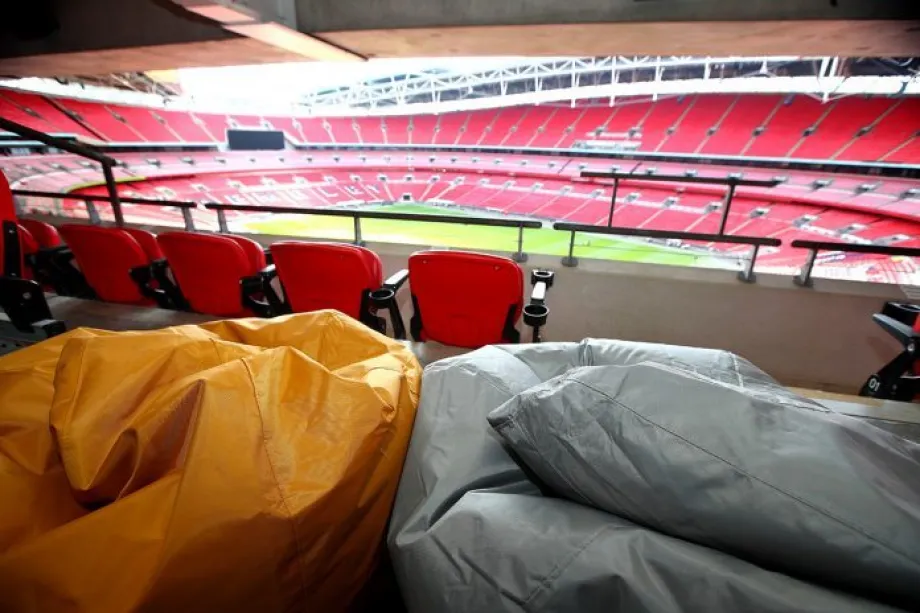
Wembley Stadium is one of the most recognisable sporting venues in the world, hosting major football matches, concerts and national events attended by tens of thousands of visitors.
To improve accessibility and create a more inclusive experience for guests, Wembley introduced dedicated sensory rooms designed to support visitors who may find large events overwhelming.
These spaces provide a calm and supportive environment where visitors can regulate sensory input before returning to enjoy the event.
Exciting Immersive Spaces for the Home of Football
Project Overview
Project Type: Sensory Environment
Location: London, United Kingdom
Client: Wembley Stadium
Sector: Sports & Public Venues
Primary Users: Stadium visitors including neurodivergent guests and families
The challenge
Large sporting venues are among the most stimulating public environments.
Crowded spaces, bright lighting, loud music, announcements, unpredictable sounds and the emotional atmosphere of major events can create significant sensory overload for some visitors.
For individuals with sensory sensitivities, including autistic visitors, attending major events can therefore be difficult and cause sensory overload.
Wembley Stadium wanted to create a space where visitors could take a break from the intense sensory environment of the stadium without leaving the venue entirely.
The goal was to ensure that more people could attend and enjoy events at the stadium while feeling supported and comfortable.
Client perspective
"To be able to open these spaces at the most iconic multi-purpose venue in the world is a moment of great excitement. We pride ourselves on being an inclusive stadium, and this further reinforces that commitment.
On a personal level, having been involved in disability access throughout my career and as an adult with Asperger’s Syndrome, I have seen first-hand the benefit these spaces and programmes can bring."
Matthew Owen, Wembley Stadium’s Customer Engagement Manager & Lead on Disability Access planning and provision
Experia design approach
Experia worked with the stadium team to design sensory environments that provide calm and regulation within the context of a busy stadium.
The design focused on creating spaces that contrast with the high-energy environment outside the room while still feeling welcoming and engaging.
Key design priorities included:
• reducing sensory stimulation
• providing calming visual elements
• creating comfortable spaces for relaxation
• ensuring the environment was easy for visitors to use
The result was a sensory environment that supports visitors during busy events while integrating smoothly into the stadium’s operational environment.
Key sensory features
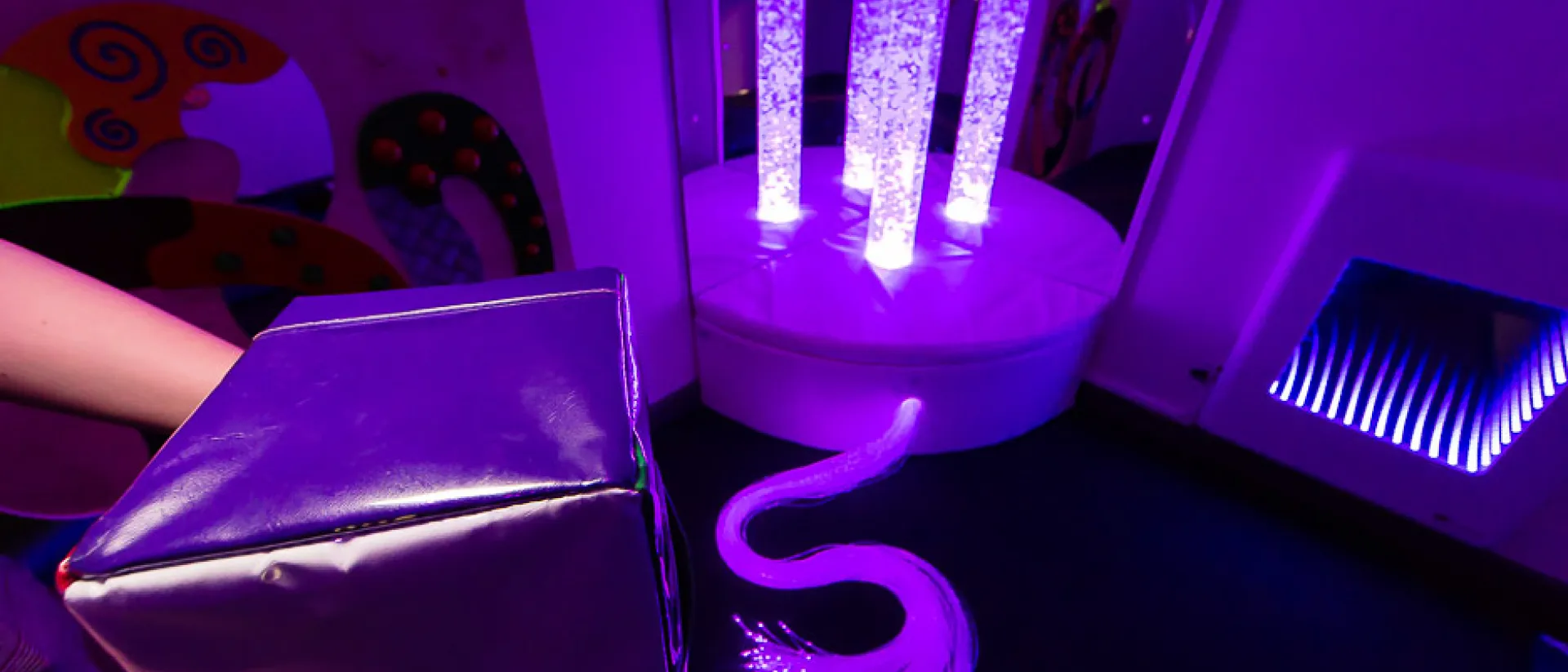
The sensory rooms include a range of carefully selected elements designed to create a calming atmosphere.
Features include:
• bubble tube lighting providing gentle visual movement
• fibre optic lighting offering calming colour changes
• soft seating areas allowing visitors to relax comfortably
• interactive sensory equipment providing gentle engagement
These features help visitors regulate sensory input while remaining within the stadium environment.
Before and after transformation
Before the installation of the sensory rooms, visitors who needed a break from the stadium environment often had limited options for finding a quiet space.
The introduction of dedicated sensory environments created a new facility within the stadium where guests can relax and reset before returning to the event.
The transformation demonstrates how thoughtful design can make large public venues more accessible and inclusive.
How the space is used
Visitors use the sensory rooms during events when they need a break from the intensity of the stadium environment.
Families attending events with children often find the rooms particularly valuable, providing a space where children can regulate sensory input before returning to the main event.
The rooms allow guests to remain at the stadium rather than leaving early due to sensory overload.
The outcome
The sensory rooms at Wembley Stadium have helped create a more inclusive experience for visitors attending major sporting and entertainment events.
By providing a dedicated space for sensory regulation, the stadium has made it easier for guests with sensory sensitivities to enjoy events that might otherwise feel overwhelming.
The project demonstrates how sensory environments can support accessibility in large-scale public venues.
Wembley introduced two sensory rooms and combined traditional sensory equipment with immersive technology helping set a new standard for accessible venues.
Experia perspective
“Having Wembley Stadium recognise the importance of installing a sensory space is a huge help in the work we’re doing to encourage other venues to offer similar spaces. There are a huge number of shopping centres, sports venues, stadiums and other spaces which experience high visitor numbers that we hope to encourage to look at their own offering and consider including a multi-sensory space or equipment. These spaces can make a huge difference for those with special needs to relax, feel calm and enjoy time with friends and family without feeling overwhelmed.”
Gareth Jones, Founder, Experia
Learn more about sensory environments
What Is a Sensory Room?
Sensory Room Design Guide
Sensory Room Equipment Guide
Sensory Room Planning Guide
Sensory Room Cost Guide
Related projects
Hector International Airport Sensory Environment
Medical City Healthcare Sensory Room
Hamad International Airport Sensory Environment
Planning a sensory environment?
Experia designs and installs sensory environments for schools, healthcare organisations and public venues across the UK and internationally.
If you are planning a sensory room or multisensory environment and would like expert guidance, our team can help you explore the options and design a solution that meets your needs.
Speak to a Sensory Environment Specialist
or request a Sensory Room Quotation
What an amazing experience are young disabled supporters had at Wembley yesterday. Our parents tell us that the staff in the sensory room were amazing. Thank you to all @wembleystadium for making this possible YNWA pic.twitter.com/4T9YeyRz6l
— Liverpool Disabled Supporters Association (@LiverpoolDSA) May 15, 2022