
Project overview
Project type: Sensory Environment
Location: Doha, Qatar
Client: Hamad International Airport
Sector: Airport & Transport
Primary users: Travellers including neurodivergent passengers, families and individuals seeking a calm environment
Introduction
Hamad International Airport in Doha is one of the busiest and most advanced airports in the world, welcoming millions of passengers each year.
As part of its commitment to improving accessibility and passenger wellbeing, the airport introduced a dedicated sensory environment designed to support travellers who may find busy airport environments overwhelming.
The installation provides a calm and controlled environment where passengers can relax and regulate sensory input before continuing their journey.
The challenge
Airports are complex environments with constant movement, bright lighting, announcements and large crowds.
For some travellers, particularly individuals with sensory sensitivities, these conditions can quickly become overwhelming.
Hamad International Airport wanted to introduce a dedicated environment where passengers could step away from the busy terminal and regain a sense of calm before continuing their journey.
The challenge was to create a sensory space that would integrate seamlessly within the operational environment of a major international airport while providing meaningful sensory support for passengers.
Client perspective
This will be a great addition to the airport, and I don’t think any other airport has considered children with special needs accessibility in the same way. Yes, of course, we would recommend Experia to everyone; the quality of support that comes with their items is fantastic
Eng. Mohammad Salaymeh, The Rehab Division Manager
Experia design approach
Experia worked with the airport team to design a sensory environment that contrasts with the stimulating atmosphere of the airport terminal.
The focus was on creating a calm and welcoming space that allows visitors to regulate sensory input in a controlled environment.
The design approach considered:
• reducing sensory stimulation
• introducing calming visual elements
• creating comfortable spaces for relaxation
• ensuring the environment could be easily used by travellers of different ages
The resulting environment provides a calm space within the terminal where travellers can relax before continuing their journey.
Key sensory features
The sensory environment incorporates a range of carefully selected elements designed to support sensory regulation.
Features include:
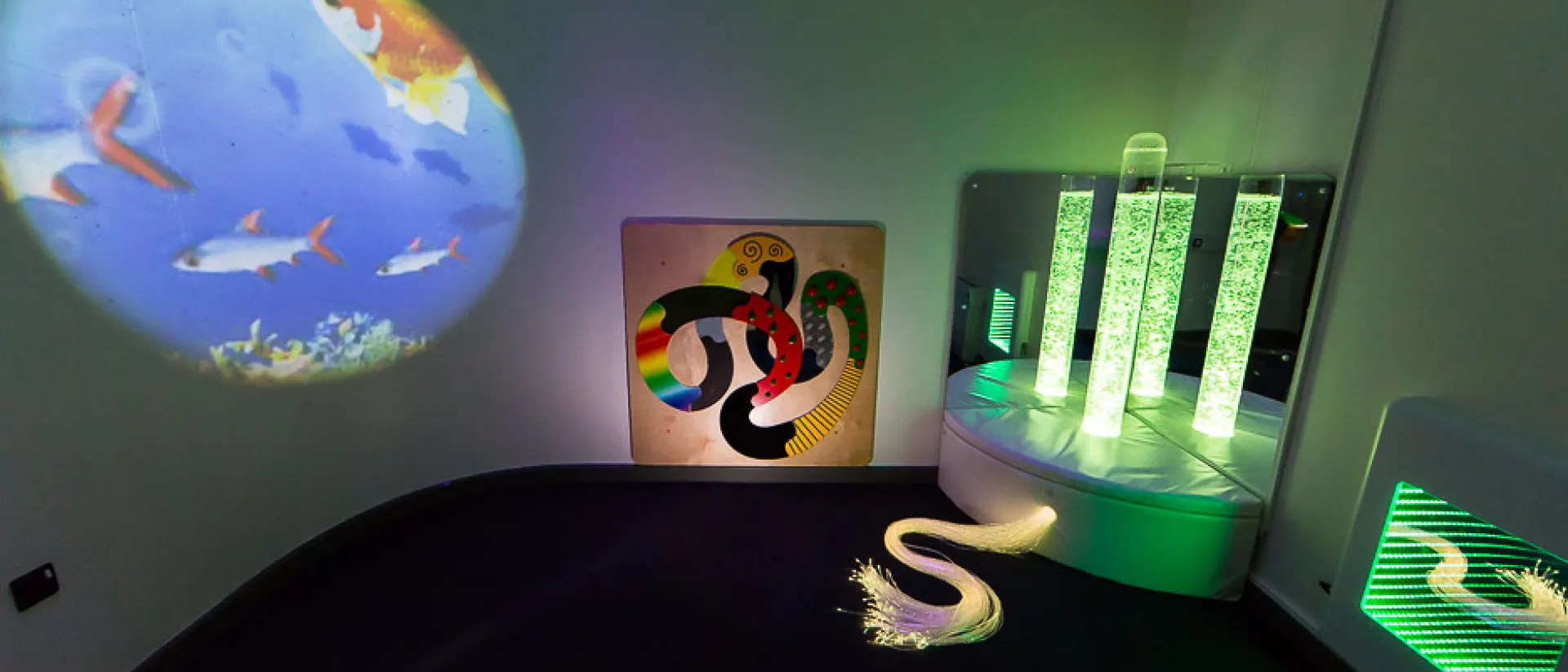
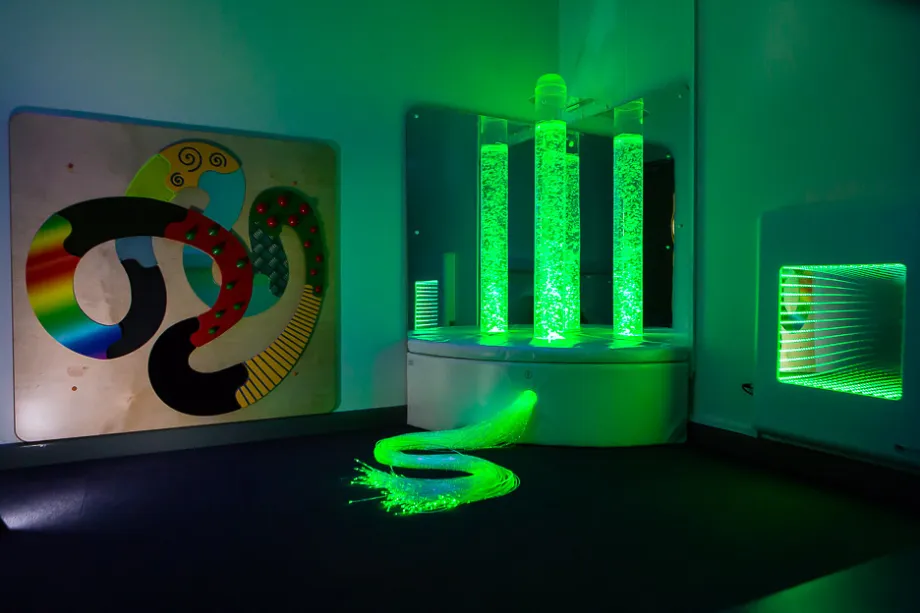
• bubble tube lighting providing calming visual movement
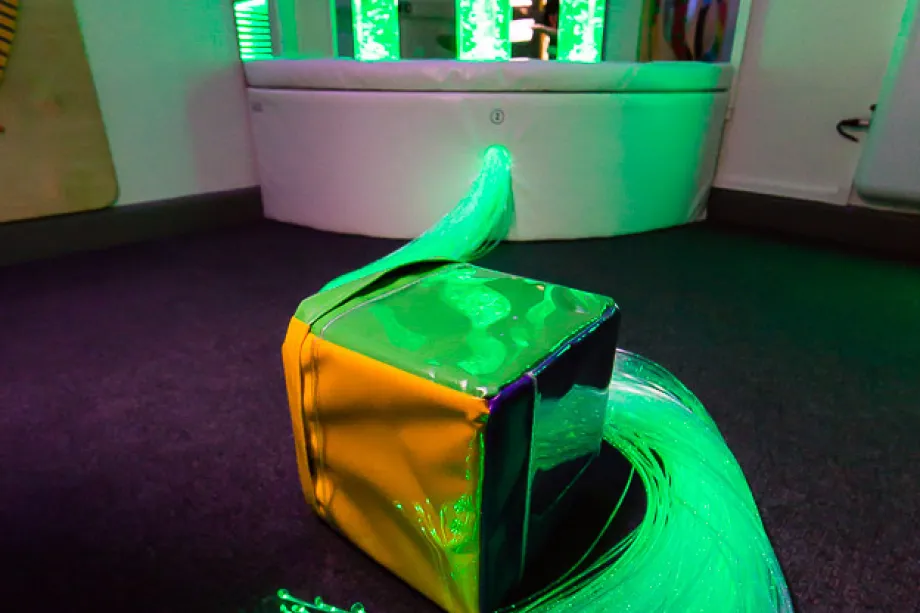
• fibre optic lighting creating gentle colour transitions
• comfortable seating areas where visitors can relax
• interactive sensory elements designed for gentle engagement
Together these features create a controlled sensory experience that contrasts with the busy airport environment outside the room.
Before and after transformation
Prior to the installation, the space within the airport terminal did not provide a dedicated area for passengers seeking a calm environment.
Through careful design and installation, the space was transformed into a sensory environment that supports accessibility and passenger wellbeing.
The installation demonstrates how major transport hubs can incorporate inclusive design features while maintaining efficient airport operations.
How the space is used
Travellers use the sensory environment to take a break from the busy terminal environment before boarding their flights.
Families travelling with children often use the room to provide a calm moment during long journeys.
Passengers with sensory sensitivities can regulate sensory input in a supportive environment before continuing their journey through the airport.
The outcome
The sensory environment at Hamad International Airport demonstrates how large transport hubs can introduce facilities that improve accessibility and passenger experience.
By providing a calm space within the terminal, the airport has created an environment that supports travellers who may otherwise find the airport experience overwhelming.
The project highlights how thoughtful design can make international travel more inclusive for a wider range of passengers.
Experia perspective
“Busy environments such as international airports can be challenging for individuals with sensory sensitivities. Carefully designed sensory environments allow travellers to regulate sensory input and feel more comfortable while travelling.”
Gareth Jones, Founder and CEO, Experia
or
Learn more about sensory environments
What Is a Sensory Room
Sensory Room Design Guide
Sensory Room Equipment Guide
Sensory Room Planning Guide
Sensory Room Cost Guide