
Project overview
Project type: Sensory Environment and Immersive Reality Room
Location: Fargo, North Dakota, United States
Client: Hector International Airport
Sector: Airport & transport
Primary users: Travellers including neurodivergent passengers, families and children
Introduction
Hector International Airport in Fargo, North Dakota has become the first airport in the world to install both a sensory room and an immersive reality room within an operational terminal.
The project introduces two dedicated environments designed to support passenger wellbeing while also offering an engaging experience for travellers waiting to board their flights.
By integrating these spaces directly into the working terminal, the airport has created a new model for how transport hubs can improve accessibility and passenger experience.
The challenge
Airports are busy and often overwhelming environments. Bright lighting, public announcements, crowds and unfamiliar surroundings can create significant stress for travellers, particularly for individuals with sensory sensitivities or neurodivergent conditions.
Hector International Airport recognised the need to create a space where passengers could step away from the busy terminal environment and regulate their sensory input before continuing their journey.
The challenge was to design environments that could operate safely within an active airport terminal while providing meaningful sensory support and engagement for travellers of all ages.
Client perspective
“These additions represent our commitment to providing innovative, passenger-focused experiences. We want every traveller passing through Hector International Airport to feel comfortable and supported.”
Airport Representative, Hector International Airport
Experia design approach
Experia worked closely with the airport team to develop two complementary environments that serve different but related purposes.
The design focused on balancing calm sensory regulation with engaging immersive experiences.
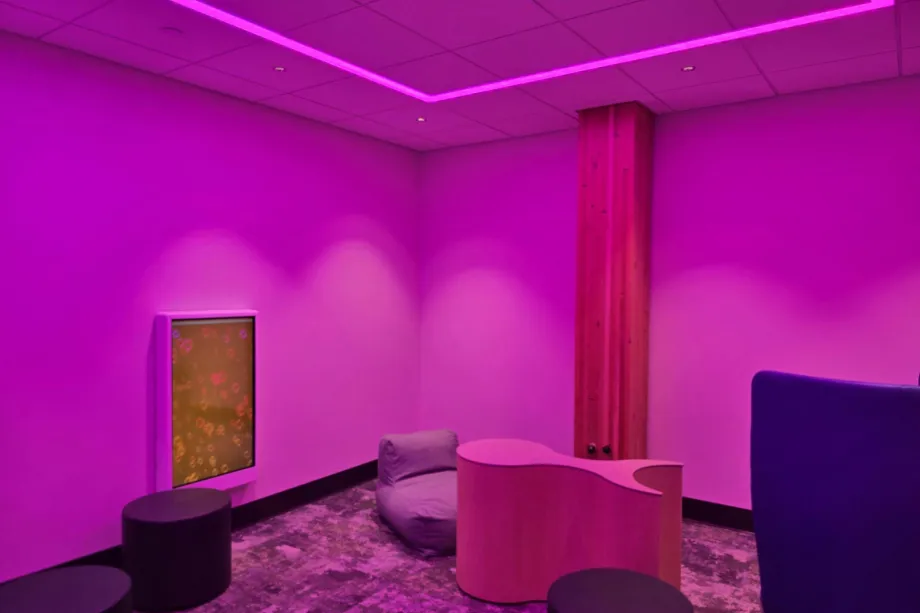
The first space was designed as a sensory room, providing a quiet and calming environment where travellers can regulate sensory input.
The second space introduced an immersive projection environment, allowing visitors to explore interactive digital experiences without the need for wearable technology such as headsets.
By combining calming sensory elements with immersive technology, the installation offers both relaxation and engagement within the airport environment.
Key sensory features
The sensory room incorporates a range of carefully selected elements designed to create a calm and supportive atmosphere.
Key features include:
• Bubble wall lighting providing gentle visual stimulation
• Comfortable seating areas where visitors can relax
• Soft lighting designed to reduce sensory overload
• Interactive sensory elements encouraging calm engagement
The installation also includes the first bubble wall installed within a United States airport terminal, providing a visually calming focal point for visitors.
These features allow passengers to step away from the busy terminal environment and regulate their sensory input before continuing their journey.
Immersive environment
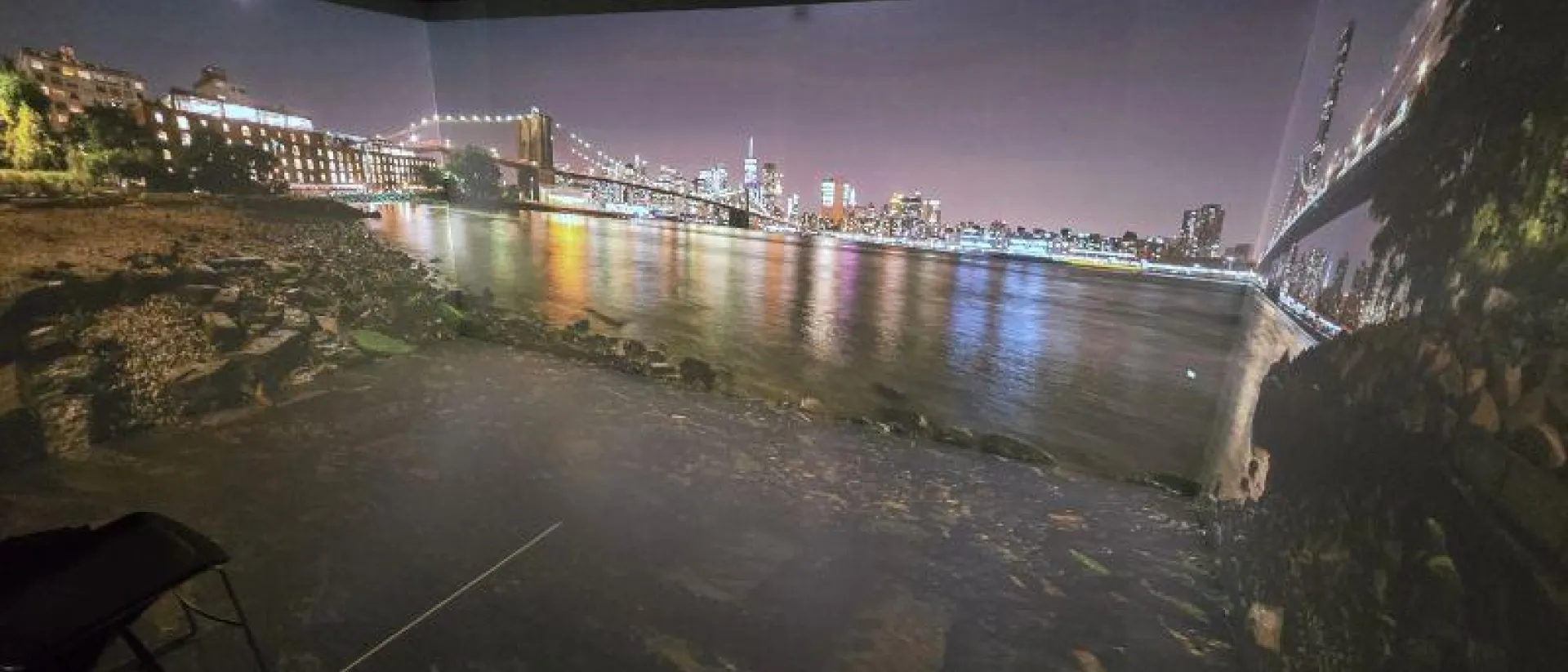
Alongside the sensory room, the airport introduced a fully immersive projection room developed by Immersive Reality USA.
The immersive space allows travellers to step inside a wide range of digital environments using large-scale projection technology. Unlike virtual reality systems, the immersive room does not require headsets or wearable equipment.
Visitors can explore more than 700 interactive environments, including locations such as Buckingham Palace, natural landscapes and educational experiences.
The immersive room provides a unique experience for passengers waiting for flights while also offering a relaxing and engaging space for families travelling with children.
Before and after transformation
Before the installation, the space within the airport terminal served a conventional function and did not provide dedicated support for travellers who might need a calm environment.
Through careful design and installation, the area was transformed into two specialised spaces that now support both accessibility and passenger experience.
The sensory room provides a calm refuge from the busy terminal, while the immersive environment offers a unique interactive experience for travellers waiting to board.
How the space is used
Passengers use the sensory room as a quiet space where they can relax and regulate sensory input before continuing their journey.
Families travelling with children frequently use the space to provide a calm break before boarding flights.
The immersive environment offers an engaging experience where travellers can explore interactive digital environments while waiting for departure.
Together, the two spaces create a more inclusive airport experience that benefits a wide range of passengers.
The outcome
The installation demonstrates how airports can integrate sensory environments within operational terminals to improve accessibility and passenger wellbeing.
By introducing both a calming sensory space and an immersive experience, Hector International Airport has created an environment that supports passengers while also offering an innovative attraction within the terminal.
The project highlights how thoughtful design can make transport hubs more inclusive and welcoming for travellers with different sensory needs.
The Experia perspective
“Public environments such as airports can present challenges for individuals with sensory sensitivities. By creating spaces where people can relax and regulate sensory input, airports can make travel more accessible for everyone.”
Gareth Jones, Founder & CEO, Experia
Planning a sensory environment?
Experia designs and installs sensory environments for schools, healthcare organisations and public venues around the world.
If you are planning a sensory environment and would like expert advice, our team would be happy to help.
or
Learn more about sensory environments
What Is a Sensory Room
Sensory Room Design Guide
Sensory Room Equipment Guide
Sensory Room Planning Guide
Sensory Room Cost Guide